

Interview: Artistic Director Kazushi Ono talks about the 2026/2027 season
The Season Opens with Il Turco in Italia, Presented at NNTT for the First Time
―The 2026/2027 season features three new productions: Rossini's rarely performed opera buffa Il Turco in Italia; Britten's Peter Grimes, conducted by you; and Verdi's Macbeth, which will bring the season to a close. Could you begin by telling us about the distinctive qualities of these three works?
ONO: Il Turco in Italia may not be an opera that audiences encounter very often, although it has been performed increasingly frequently in recent years. I think there is now a deeper understanding of the work.
To bring out the comedy in Il Turco in Italia, it is essential to have an excellent cast. The ensembles are among the opera's greatest attractions: there are trios, quartets and quintets, and at the climax of Act II, seven characters give voice to their individual thoughts and emotions in a septet that leads to the grand conclusion.
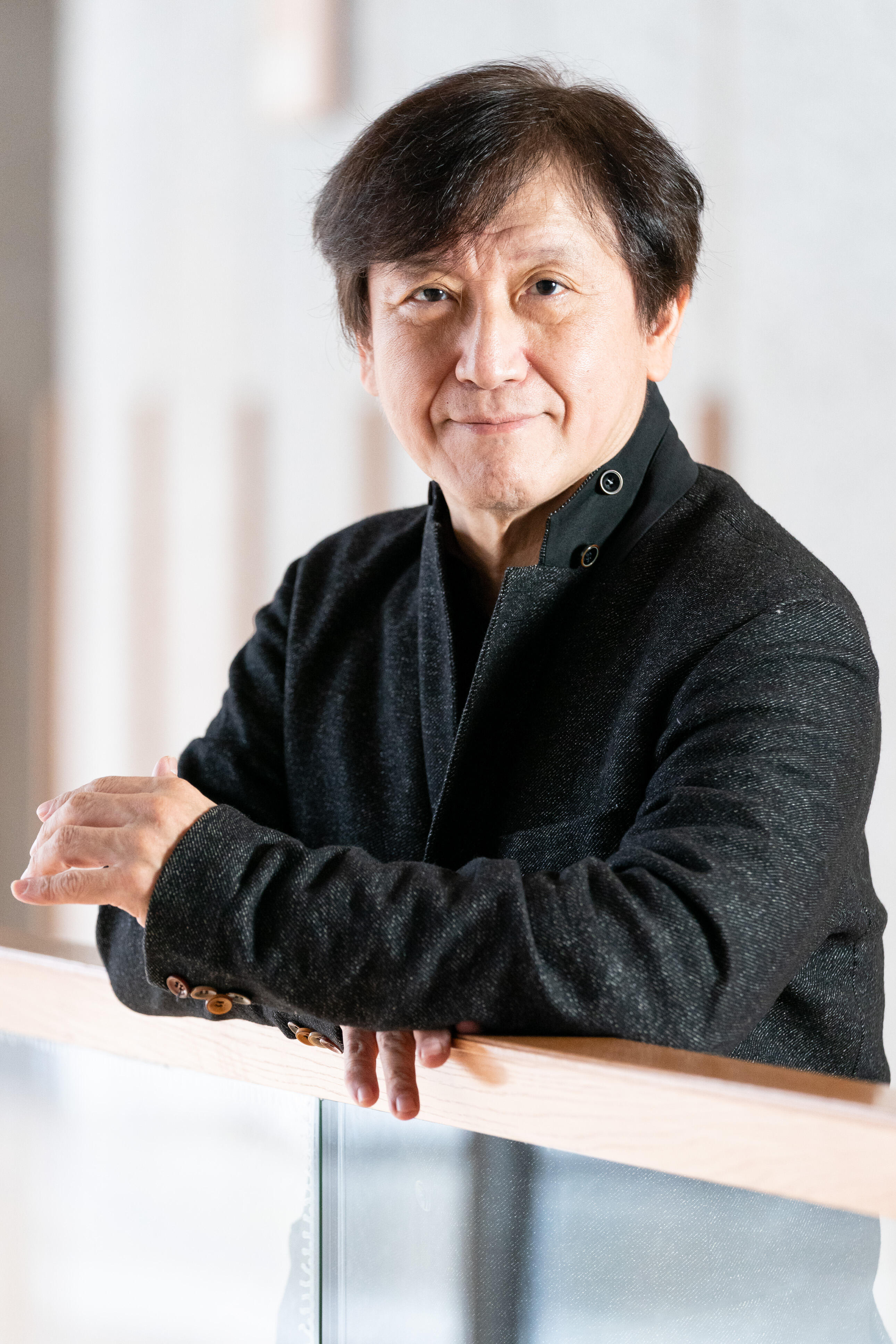
Kazushi Ono
By opening the season with this opera, I hope it will allow audiences to begin the new season with a fresh sense of discovery.
The production is a co-production with the Teatro Real of Madrid and the Opéra National de Lyon. It is directed by Laurent Pelly, whose production of Händel's Giulio Cesare, presented at the New National Theatre Tokyo in 2022, received tremendous acclaim. Audiences will once again have the opportunity to experience one of his distinctive productions.
―What can you tell us about the cast?
ONO: The heroine, Fiorilla, will be sung by Claudia Muschio. She came to our rescue at short notice for La Sonnambula, and this time she will bring the captivating character of Fiorilla to life.
The role of Selim, originally scheduled to be sung by Giorgi Manoshvili, will instead be performed by Alejandro Baliñas Vieites, who has attracted attention at the Rossini Opera Festival in Pesaro and at the Paris Opera.
Don Narciso will be sung by the young tenor Ruzil Gatin. We also welcome back the familiar and highly experienced Paolo Bordogna and Bruno Taddia. They are all regular guests at the Rossini Opera Festival, and I am sure they will create a wonderfully lively and agile ensemble.
The conductor will be Alessandro Bonato, a young artist whose career is rapidly developing. I believe he will bring the opera together with his superb technique and sensitivity.
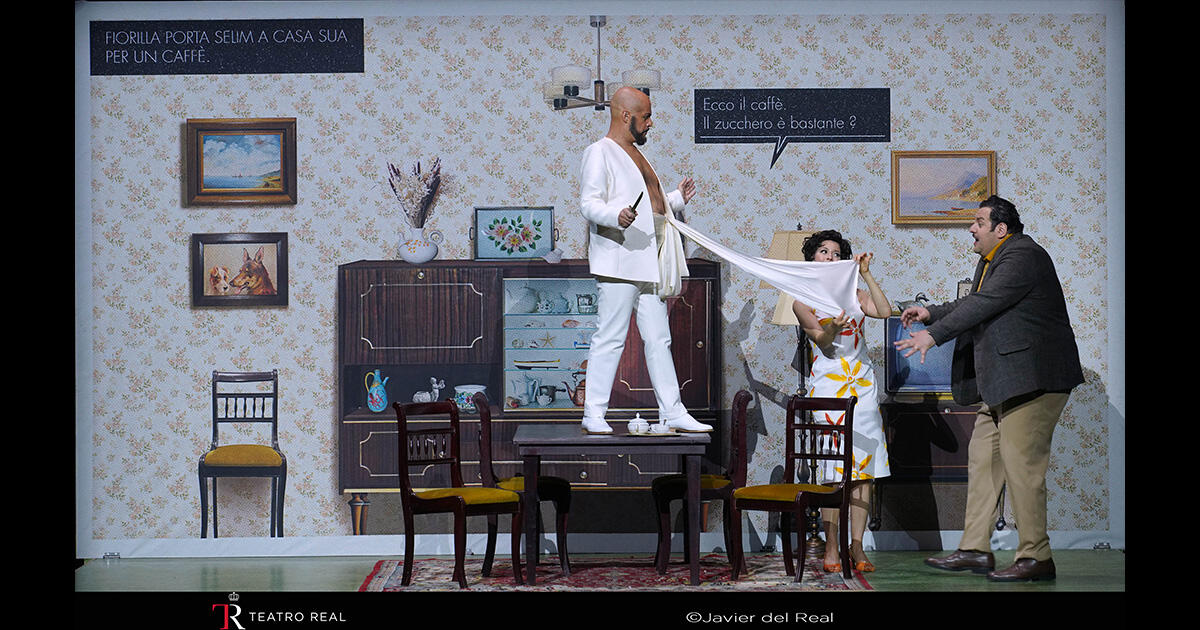
Il Turco in Italia
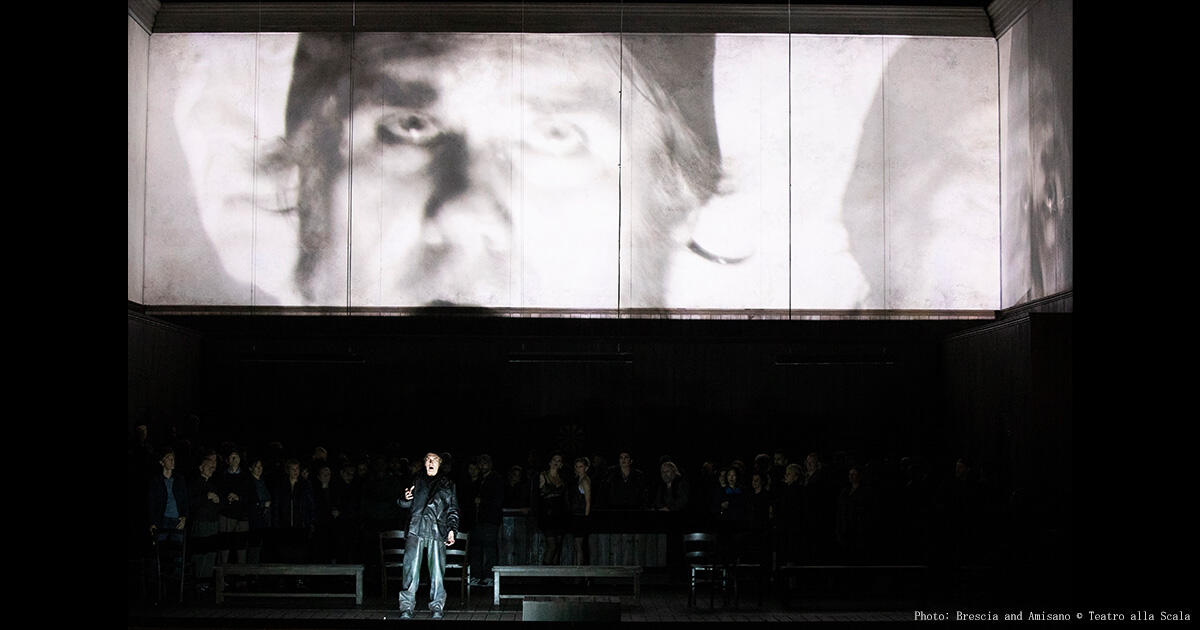
Peter Grimes
The Second New Production: Peter Grimes, Conducted by Kazushi Ono
―The next new production is Britten's Peter Grimes, which you will conduct yourself.
ONO: I had always felt strongly that we should present an opera by Britten at the New National Theatre Tokyo. We first decided to stage A Midsummer Night's Dream and had assembled an excellent cast, but just as we were ready to move forward, the COVID-19 pandemic struck.
Because A Midsummer Night's Dream became the first production presented when the theatre reopened, the performers had to maintain physical distance from one another, and we were unable to realise the full dynamism of the staging.
I wondered whether there might be a way to present Britten again under better circumstances. At first I considered returning to A Midsummer Night's Dream, but after much thought, I decided instead on Peter Grimes, a work that speaks directly to contemporary society.
Although the central character, Grimes, is condemned and ostracised by society, he himself is a man without deceit or hidden motives. It is, in fact, the villagers who harbour darkness within themselves. Britten's penetrating view of society is given powerful musical expression.
The eloquence of the music as that darkness is gradually exposed is truly exceptional. There is a scene in which the boy whom Grimes employs as his apprentice disappears, and the villagers confront him with accusations and questions. Britten's use of the chorus in such passages reveals how deeply he valued dramatic expression.
―This production of Peter Grimes was first presented at La Scala in 2023. Brandon Jovanovich, who sang the title role at its premiere, will also appear at the New National Theatre Tokyo.
ONO: I previously worked with Brandon Jovanovich in Aida at the Metropolitan Opera. I am very much looking forward to performing with him again after such a long time.
The role of Ellen, a deeply compassionate woman who tries to understand Grimes's life and offers him advice, will be sung by the distinguished British soprano Sally Matthews. I believe she and Jovanovich will create a powerful relationship on stage.
The director is the renowned Robert Carsen. I have worked with him before, and he has an almost inexhaustible wealth of ideas. He also commands great trust from singers.
As for my own experience, I have conducted Peter Grimes in concert and, on stage, at La Monnaie and the Opéra de Lyon. This will be my third time conducting the work in a fully staged production, and I hope to draw on all the experience I have accumulated over the years.
A New Production of Macbeth Brings the Season to a Close
―The third new production is Verdi's Macbeth, which will be presented at the end of the season. This will be a new production by the New National Theatre Tokyo. Like Peter Grimes, Macbeth is an opera in which the chorus plays a particularly important role.
ONO: Macbeth will be presented in June and July 2027. It will be conducted by Carlo Rizzi, who has appeared at the New National Theatre Tokyo on many occasions. He is renowned for his outstanding interpretations of Verdi, and I have great expectations for this production.
The director is the equally distinguished Lorenzo Mariani. I am delighted that we are able to create a new production with such a formidable formidable pairing.
The title role will be sung by Ernesto Petti, one of today's foremost interpreters of the role. Lady Macbeth will be sung by Karen Gardeazabal, a singer who brings great emotional depth to her performances and is ideally suited to the part.
―Which scenes in Macbeth would you particularly recommend audiences listen for?
ONO: Verdi himself is said to have remarked that a work based on a Shakespearean masterpiece could hardly fail.
Take, for example, Lady Macbeth's first aria, in which she resolves that King Duncan must be killed. The violence of the stretta and the surging force of the orchestra draw us into a desolate and brutal world.
Then, in Act IV, Lady Macbeth trembles at the crimes she has committed, and her voice gradually becomes faint and frayed. Beneath her, the orchestra provides an eerie and disturbing accompaniment. In music such as this, we hear Verdi probing deeply into the human psyche.
I would also particularly emphasise the crucial role played by the chorus. At the end of Act I, there is the chorus of those horrified by the discovery that the King has been murdered. At the end of Act II, an atmosphere of suspicion hangs heavily over the scene. This is an opera in which audiences can experience the New National Theatre Chorus at its very best.
Two Masterpieces of Verismo Opera: Cavalleria Rusticana / Pagliacci
―Another major highlight of the 2026/2027 season is Cavalleria Rusticana / Pagliacci, the other production you will conduct. Verismo opera often deals with familiar, immediately engaging subject matter, and the music can seem lyrical and appealing. How do you approach these works from the conductor's perspective?
ONO: In both works, the orchestral writing and the vocal lines are closely intertwined. The essence of each tragedy is encapsulated in the orchestral preludes and intermezzi.
Even taken individually, each has a scale of construction and a depth of concentration that extend far beyond the usual expectations of a one-act opera.
―At the season announcement press conference in January, which you joined remotely, you spoke about experiencing Giuseppe Patanè's conducting of Pagliacci while you were training at the Bavarian State Opera. What is your own approach when conducting verismo opera?
ONO: In terms of the relationship between the conductor and the orchestra, take the Intermezzo from Cavalleria Rusticana, for example. If I simply conduct the Intermezzo by tracing the melody like this [sings the phrase], it conveys nothing.
Editor's note: Maestro Ono sang the musical passages as he explained them.
What matters is the drama that has taken place immediately before the Intermezzo: love has fallen apart with devastating force, and tragedy has taken root within the human heart.
What distinguishes Cavalleria Rusticana and Pagliacci is the way the deepest human emotions are so directly and powerfully fused with the music.
―Even when describing the music in words, you speak with such passion that I am beginning to think that verismo opera may suit you particularly well.
ONO: You may be right―it may suit me very well! [Laughs]
Some people apparently cannot quite picture me conducting Cavalleria Rusticana / Pagliacci. I hope they will come with a sense of curiosity to discover what my approach will be.
―The cast is also exceptional. It is particularly exciting that Eri Nakamura, who received great acclaim for her performance as Gilda in Rigoletto this season, will now sing Nedda.
ONO: Nedda is not a role for a light coloratura voice. Like Violetta in La Traviata, the role requires not only secure high notes but also a well-developed middle register. I believe this is an especially rewarding moment to hear Nakamura as Nedda.
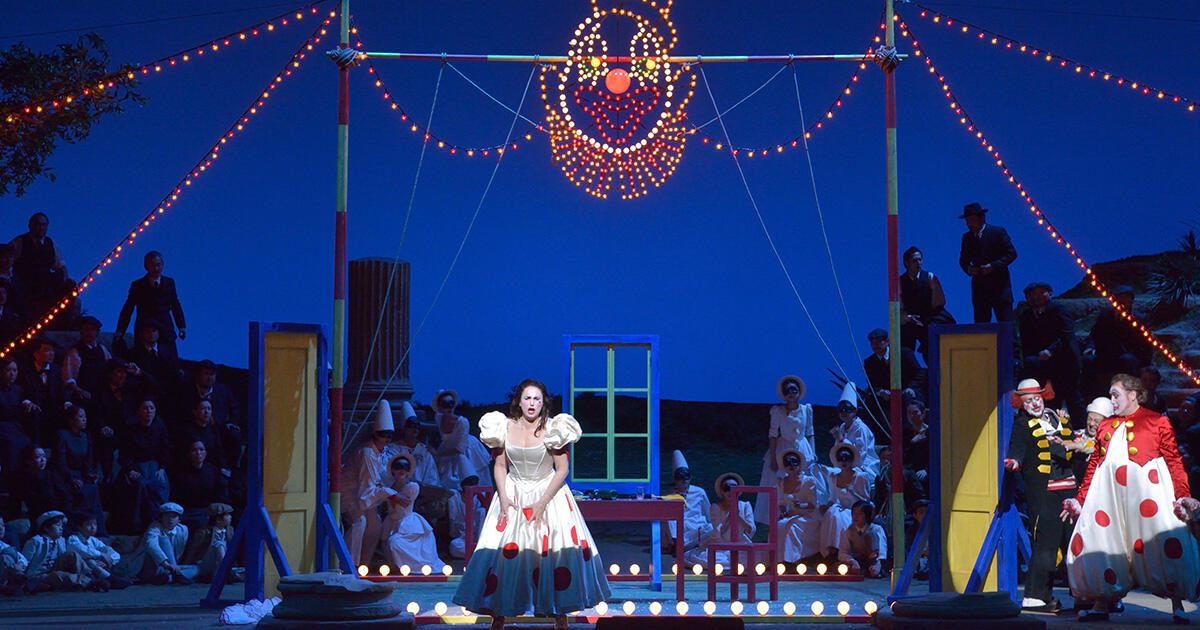
Pagliacci
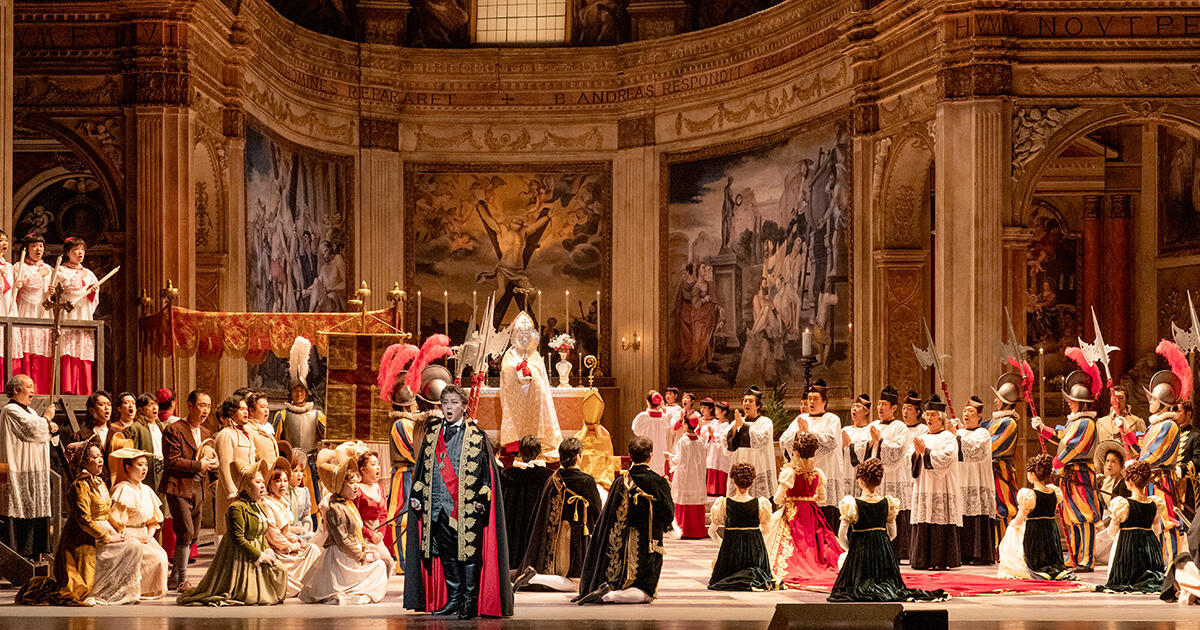
Tosca
A Host of Outstanding Artists in Returning Productions
―Turning to the other productions in the season, the New National Theatre Tokyo will revive several productions that have long been audience favourites, including Le Nozze di Figaro, Tosca, Salome, Der Rosenkavalier and Falstaff. These revivals provide an opportunity to focus closely on the conductors and singers. Some of the artists have appeared in Japan many times, while others will offer audiences the excitement of discovering new artists.
ONO: Maurizio Benini, who will conduct Falstaff, and Andriy Yurkevych, who will conduct Eugene Onegin, have previously led outstanding productions here. The Japanese conductors Ryusuke Numajiri, for Salome, and Tetsuro Ban, for Le Nozze di Figaro, have likewise done excellent work with us.
Patrick Hahn, who will conduct Der Rosenkavalier, previously conducted Die Fledermaus here in 2023. Although still young, he is an extraordinarily gifted artist.
I am particularly pleased that we have been able to assemble a cast composed entirely of Japanese singers for Le Nozze di Figaro. I would also draw particular attention to Yoshiaki Kimura, who is active in Germany and will make his debut at the New National Theatre Tokyo in the role of Figaro.
―Carmen Giannattasio, who will sing the title role in Tosca, is known in Italy as a singer renowned for her dramatic acting.
ONO: She sings with the immediacy and naturalness of spoken dialogue, which makes her ideally suited to expressing Tosca's personality.
It is always important to me, when casting, that audiences should hear a distinct vocal character suited to each role.
Interview and text by Mika Iuchi, music writer